
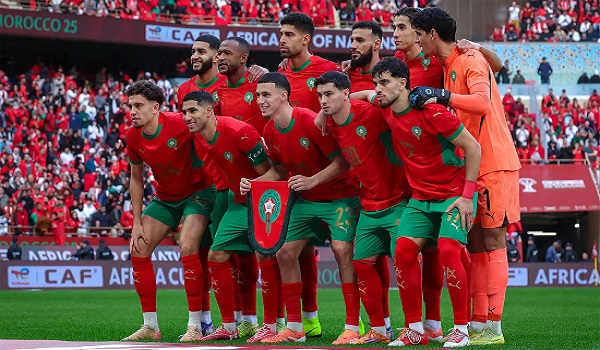
Morocco’s 2026 FIFA World Cup squad
HABARI DAILY I Kampala, Uganda I The 2026 FIFA World Cup is upon us, and as a continent, we can’t help it but dream big. Habari Daily can reveal that a growing number of football analysts and former players believe Africa may be closer than ever to producing its first world champion.
While traditional giants from Europe and South America remain the overwhelming favorites to lift football’s most coveted trophy, confidence is rising that one of Africa’s leading nations could finally break the continent’s long-standing World Cup barrier.
That optimism is anchored by two major developments: Morocco’s historic run to the semi-finals of the 2022 FIFA World Cup in Qatar and the unprecedented participation of 10 African nations in the expanded 48-team tournament that is being hosted by the United States, Canada and Mexico.
For decades, African football has produced world-class players and memorable World Cup performances, yet no African team had ever advanced beyond the quarter-finals until Morocco rewrote history four years ago. The Atlas Lions stunned the football world by defeating Spain and Portugal before eventually falling to France in the semi-finals.
The achievement transformed perceptions of African football and demonstrated that the continent’s best teams can compete with — and defeat — the game’s traditional powerhouses.
“Morocco changed the conversation,” said former Nigerian international Sunday Oliseh in a recent television discussion on African football. “Before 2022, people spoke about African teams as outsiders. Now they are viewed as genuine contenders capable of reaching the final stages of the competition.”
Morocco entered the 2026 tournament as Africa’s highest-ranked side and one of the most respected teams in international football. Led by star defender Achraf Hakimi and attacking playmaker Ibrahim Díaz, the North African nation possesses a squad filled with talent competing at the highest levels of European football.
Football analyst and commentator Gary Al-Smith believes Morocco’s experience could prove invaluable.
“They are no longer a surprise package,” he noted. “This is a mature team that understands tournament football and has already shown it can handle pressure against elite opponents.”
Senegal stands tall
However, Morocco is not the continent’s only hope.
Senegal is widely regarded by many experts as Africa’s most balanced team. The Teranga Lions combine physical strength, tactical discipline and international experience, qualities that are often essential for success in the latter stages of major tournaments.
Despite the retirement of some members of their celebrated golden generation, Senegal continues to produce elite talent and remains one of Africa’s most consistent performers on the global stage.
Former FIFA development officer and football analyst Evariste Ndayishimiye argues that Senegal’s depth could be a major advantage.
“In tournament football, squad depth matters almost as much as star quality,” he said. “Senegal has players capable of competing with the best teams in Europe and South America.”
Attacking talent brings hope
Beyond the two leading contenders, several African nations are also generating excitement. Egypt, powered by a new generation of attacking talent, remains a dangerous side with extensive international experience. Algeria continues to field technically gifted players across all positions, while Ghana is rebuilding a competitive squad capable of causing major upsets.
Cape Verde has emerged as one of the continent’s most impressive football stories in recent years, with disciplined performances and a growing reputation for tactical organization.
The expanded 48-team World Cup format may also work in Africa’s favor.
With more teams participating and a revised tournament structure, analysts believe African nations could benefit from greater opportunities to advance beyond the group stage. The larger competition increases the likelihood of favorable pathways through the knockout rounds while rewarding squads with depth and versatility.
“An expanded World Cup creates more room for surprises,” said football strategist Tunde Adelakun. “If an African team gains momentum early, anything becomes possible.”
History offers further encouragement. In recent tournaments, several heavily favored nations have been eliminated by disciplined and tactically organized underdogs. Morocco’s victories over Spain and Portugal in 2022 remain powerful examples of how preparation and belief can overcome reputation.
The most difficult achievement
Still, experts caution that winning the World Cup remains one of the most difficult achievements in sport. Any champion must navigate a demanding seven-match campaign against the world’s strongest teams.
Yet for the first time, many believe the conversation is no longer about whether an African team can challenge for football’s biggest prize, but whether 2026 could finally be the year the continent lifts the trophy.
With record representation, growing confidence and some of the strongest squads in its history, Africa is carrying genuine hope that its long-awaited breakthrough may be closer than ever before.







About the Author