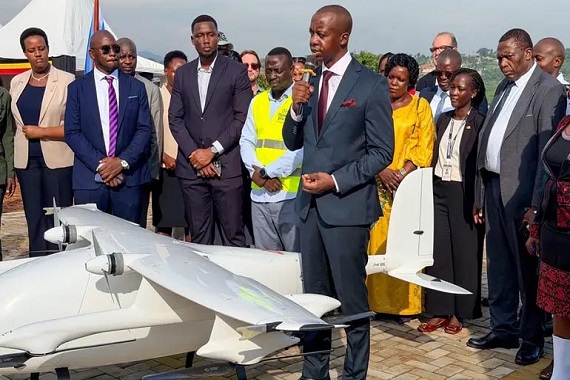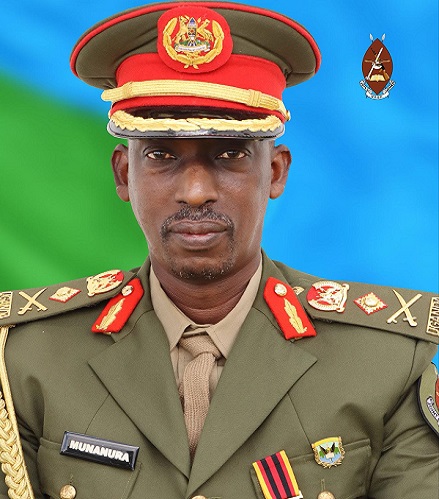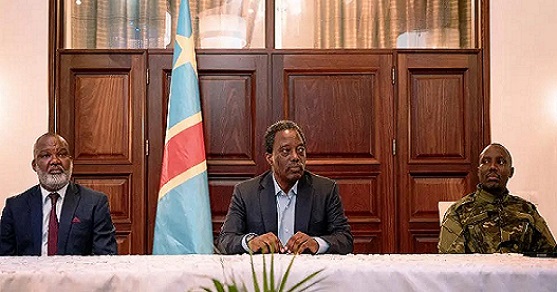
HABARI DAILY I Kampala, Uganda I Former Democratic Republic of Congo (DRC) President Joseph Kabila has warned that reported drone strikes targeting his home threaten prospects for a peaceful settlement to the country’s conflict, accusing President Félix Tshisekedi’s government of lacking the political will to end the fighting.
Kabila’s reaction adds a new political dimension to the conflict, which has been concentrated largely in eastern Congo, where government forces have been fighting the M23 rebel movement. The reported attack risks hardening positions among the parties and narrowing the space for negotiations at a time when diplomatic initiatives are seeking to establish a lasting settlement.
Kabila, who is leading the newly formed Front for the Refoundation of the Nation (FRN), reportedly said he no longer believes Tshisekedi’s government is genuinely interested in peace.
His position reflects growing mistrust between political actors as the conflict threatens to extend beyond the eastern battlefield into a wider struggle over national leadership and control of state institutions.
Government’s Commitment to Peace?
Peace negotiations depend on the willingness of opposing sides to make concessions and honour agreements. The reported strike on Kabila’s home threatens to undermine that confidence, particularly if his camp interprets the operation as an attempt to eliminate or intimidate political opponents.
Kabila has reportedly argued that the Tshisekedi administration lacks the political will required to pursue a peaceful settlement. Such a stance could make it harder for mediators to bring the government and its opponents back to the negotiating table.
The attack also risks shifting attention away from political compromise towards military responses. If the FRN and its allies conclude that negotiations offer little protection against government action, they could become less willing to pursue existing peace initiatives.
However, the reported allegations surrounding the strike and the parties’ competing positions require further confirmation. The available statement does not establish the full circumstances of the attack or provide an independent account of the government’s intentions.
Peace Frameworks Face Renewed Pressure
The reported strike comes against the backdrop of diplomatic efforts to end the fighting involving the Congolese government and M23.
The supplied account points to several steps in the peace process, including a declaration of principles signed in July 2025, prisoner exchanges facilitated through the International Committee of the Red Cross in September 2026 and an agreement on a ceasefire-verification mechanism on October 14, 2026.
It also identifies the Doha Framework, signed in November 2025 under Qatari and United States mediation, as a key part of the diplomatic process.
These initiatives are intended to provide channels for dialogue, confidence-building and the management of hostilities. Their success, however, depends on the parties maintaining enough trust to implement commitments even when tensions rise.
The reported attack on Kabila could complicate those efforts by adding another source of confrontation. If political leaders prioritise retaliation over implementation, ceasefire arrangements and negotiations could lose momentum.
The immediate concern is that a dispute involving Kabila could become entangled with the existing conflict, making it more difficult for mediators to separate political grievances from military objectives.
Conflict Risks Expanding Beyond Eastern Congo
Kabila’s involvement through the FRN could also transform the conflict from a largely regional rebellion into a broader national political confrontation.
The fighting has primarily centred on eastern Congo, where M23 has challenged government forces. But the reported attack on Kabila introduces a former head of state into the dispute and raises the possibility that opposition to Tshisekedi could become more coordinated across the country.
The supplied statement warns that the FRN-M23 alignment could encourage a wider offensive against the government rather than a return to negotiations. It also raises concerns that Kabila could mobilise local militias in Katanga, a major mining region, to destabilise the economy.
Such developments would carry risks beyond the battlefield. Disruption in mining areas could affect economic activity and government revenues, while a widening conflict would put additional pressure on security forces and civilians.
These remain potential scenarios rather than confirmed developments. Nevertheless, the prospect of political opposition merging with armed resistance would complicate efforts to contain the conflict and could make a negotiated settlement more difficult to achieve.
Opposition Divided Over Armed Rebellion
The reported attack has also exposed the difficult position facing Congo’s civilian opposition, which has criticised the government’s actions while rejecting an armed rebellion led by Kabila.
The C64 opposition coalition, which includes Martin Fayulu and Moise Katumbi, has reportedly condemned the government’s actions but also rejected Kabila’s armed approach.
The coalition’s position reflects an attempt to distinguish opposition to Tshisekedi’s administration from support for a military campaign to remove it. Its leaders have reportedly been seeking to travel to Rome to organise an inclusive national dialogue involving Tshisekedi and Kabila.
Such a process could provide a civilian-led avenue for resolving political disagreements without further expanding the fighting.
However, reports of opposition figures being arrested at Kinshasa airport threaten to complicate those efforts. Restrictions on political engagement could weaken the role of opposition leaders who might otherwise help facilitate dialogue between rival camps.
A divided opposition would also make it harder to establish a common political platform capable of supporting negotiations and encouraging restraint among the parties.
Diplomacy Under Growing Strain
The central concern following the reported drone attack is whether the parties will continue pursuing existing diplomatic initiatives or increasingly rely on military pressure.
Kabila’s reported loss of confidence in Tshisekedi’s commitment to peace signals a deterioration in the political trust needed to sustain negotiations. Meanwhile, the government faces the challenge of addressing the conflict without allowing confrontation with its opponents to undermine broader peace efforts.







About the Author