
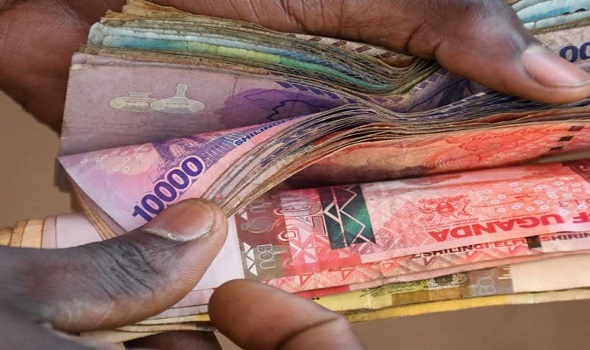
HABARI DAILY I Kampala, Uganda I The Bank of Uganda has spent a staggering Sh278 billion in interventions aimed at stabilising the Uganda Shilling against the US dollar, as the central bank grapples with mounting pressure on the country’s foreign exchange market.
The expenditure reflects the extent to which the central bank has had to intervene to moderate the depreciation of the local currency amid declining foreign exchange inflows, rising demand for dollars and external economic shocks that have complicated Uganda’s balance of payments.
However, Bank of Uganda Governor Dr Michael Atingi-Ego has cautioned that the central bank cannot continue spending its foreign exchange reserves to defend the Shilling indefinitely, arguing that sustainable currency stability must ultimately be supported by stronger exports, tourism earnings and domestic production.
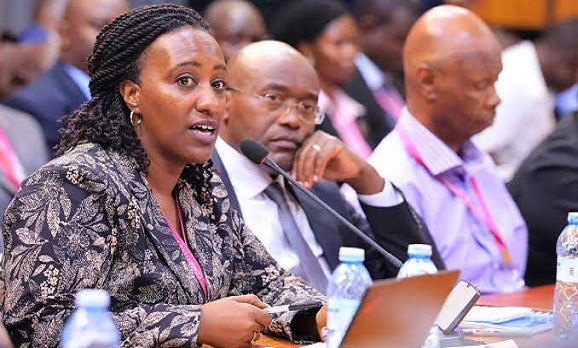
Appearing before Parliament’s Committee on Commissions, Statutory Authorities and State Enterprises (COSASE), Atingi-Ego explained that the central bank’s responsibility was to moderate excessive exchange-rate fluctuations rather than artificially maintain a particular exchange rate.
His remarks provide an insight into the financial and economic pressures behind the Sh278 billion expenditure, while highlighting the limitations of central bank intervention in an economy that depends heavily on imported goods and services.
How the Sh278 billion was spent
According to Atingi-Ego, the Bank of Uganda sold approximately $68 million (Sh278 billion) in foreign currency through limited interventions to ease pressure on the local unit.
The dollar sales were intended to increase the supply of foreign currency in the market, where importers, businesses and other economic players were struggling to meet their dollar requirements.
The central bank’s interventions included a sale of approximately $30 million in mid-October, equivalent to about Sh120 billion at the prevailing exchange rate, as the Shilling came under pressure after weakening beyond the Sh4,000 mark.
The intervention marked the central bank’s return to direct foreign exchange market sales after remaining largely on the sidelines since June 2022.
However, Atingi-Ego explained that the $68 million expenditure should not be interpreted as an attempt to permanently defend the Shilling through continuous depletion of foreign reserves.
He said the interventions were deliberately limited because the central bank must maintain sufficient reserves to meet Uganda’s essential external financial obligations.
The Bank of Uganda’s approach has therefore combined direct dollar sales with monetary policy tightening and measures aimed at withdrawing excess liquidity from the domestic financial system.
Raising interest rates to attract investors
One of the central bank’s major interventions was raising the Central Bank Rate (CBR) from 9.75% to 12%, representing an increase of 225 basis points.
The decision was announced on October 14, 2026, following an emergency Monetary Policy Committee meeting.
By increasing the benchmark lending rate, the central bank sought to make borrowing more expensive, moderate domestic demand and contain inflationary pressures arising from currency depreciation and rising international energy prices.
The higher interest rates also increased the attractiveness of Shilling-denominated government securities to investors, particularly foreign investors who had been withdrawing their investments from Uganda’s financial markets.
Atingi-Ego told MPs that the Federal Reserve’s interest rate decisions in the United States had contributed to the pressure on the Shilling.
As returns on dollar-denominated assets became more attractive, some foreign investors holding Ugandan government securities began selling their investments and converting the proceeds into dollars.
This increased demand for the US currency, putting additional pressure on the exchange rate.
The Governor said the improved returns on government securities following Uganda’s monetary policy tightening helped attract foreign investors back into the market.
At a subsequent government securities auction, where the Government had offered Sh1.4 trillion, offshore investors reportedly purchased securities worth more than Sh200 billion.
The resulting dollar inflows helped ease pressure on the foreign exchange market and supported the Shilling’s recovery from nearly Sh4,500 to approximately Sh4,050 against the dollar.
Withdrawing Sh1.3 trillion from circulation
The central bank also tightened liquidity conditions by increasing the Cash Reserve Requirement (CRR) for commercial banks from 11% to 13.5%.
The CRR represents the proportion of customer deposits and other specified liabilities that commercial banks must maintain as reserves at the central bank instead of using the money for lending and other activities.
Atingi-Ego told MPs that the adjustment enabled the Bank of Uganda to withdraw approximately Sh1.3 trillion from circulation.
The objective was to reduce excess liquidity in the banking system, moderate demand for foreign currency and strengthen the transmission of monetary policy.
The combination of higher reserve requirements and increased interest rates was also intended to discourage excessive borrowing and spending that could intensify inflation and foreign exchange pressures.
These measures, alongside improved returns on government securities, helped restore some confidence among offshore investors.
Why the Shilling came under pressure
Explaining the circumstances behind the depreciation, Atingi-Ego pointed to a deterioration in Uganda’s current account balance, which created an imbalance between the supply of and demand for foreign currency.
He cited the Ebola outbreak and subsequent travel advisories issued by some countries against Uganda, which affected tourist arrivals and reduced foreign exchange earnings from tourism.
Although he did not provide exact figures, the Governor estimated that tourist arrivals declined by more than 30%, dealing a blow to the hospitality industry and the country’s foreign exchange inflows.
He also cited geopolitical tensions in the Middle East and disruptions involving the Strait of Hormuz, which increased shipping and insurance costs for imported goods, including petroleum products.
As importers required more dollars to purchase and transport the same quantities of goods, demand for foreign currency increased.
The pressure was compounded by rising government debt-servicing obligations, which require substantial foreign currency payments.
Why BoU cannot keep spending
Atingi-Ego told COSASE that Uganda’s foreign exchange reserves, which stood at approximately $6.7 billion at the time, had to be preserved to meet essential national obligations.
He explained that the Government requires approximately $1.55 billion annually for external debt servicing and another $450 million to $500 million for government imports.
This translates into approximately $2 billion annually that the central bank must facilitate for government transactions.
Consequently, continuously selling dollars to defend the Shilling would risk weakening the country’s ability to finance essential imports and meet external debt obligations.
“People should not look at the central bank as the institution that can fix the currency. No, we can only try to stabilise the currency in the short term,” Atingi-Ego said during the November 9 Monetary Policy Committee engagement, according to New Vision.
He argued that long-term currency stability depends on strengthening Uganda’s productive capacity, increasing exports, expanding tourism earnings and improving domestic production.
Responding to the Governor, COSASE Chairperson Muwada Nkunyingi urged the central bank to do everything within its mandate to stabilise the prevailing situation.







About the Author