
The mayhem caused by drones in Sudan
HABARI DAILY I Kampala, Uganda I Widespread international condemnation has greeted a series of deadly drone strikes blamed on Sudan’s national army that reportedly killed more than 200 people in West Kordofan and the disputed Abyei region, raising fears of further escalation in the country’s devastating civil war.
The attacks, carried out on October 18 and 19, 2026, targeted areas where civilians were gathered, including a truck transporting mourners to a funeral and a crowded market. The strikes have intensified concerns about the growing use of armed drones in the conflict between Sudan’s armed forces and the paramilitary Rapid Support Forces (RSF), which erupted in April 2023.
According to the Sudan War Observatory, a conflict-monitoring group, 150 people were killed in attacks in West Kordofan on Sunday evening, including dozens of mourners travelling to pay their last respects to a deceased relative.
Emergency Lawyers, a Sudanese rights organisation, said the attacks struck civilians who were not directly involved in the fighting, highlighting the growing risks facing ordinary people as the war spreads across strategically important regions.
The Sudan War Observatory reported that a truck carrying approximately 200 mourners from an area north of Abyei was struck as it arrived in Al-Dabab town. The attack reportedly killed 145 people, while another five died when a tent where mourners had gathered was hit.
About 150 other people were injured, according to the monitoring group.
Army drones also reportedly bombed a market in Al-Muglad, another town in West Kordofan, on the same evening, although the precise number of casualties from that particular attack remained unclear.
The Sudanese army had not issued a formal response to the specific allegations surrounding the West Kordofan strikes. However, it has maintained that it does not deliberately attack civilians, even when it suspects that RSF fighters may be among them.
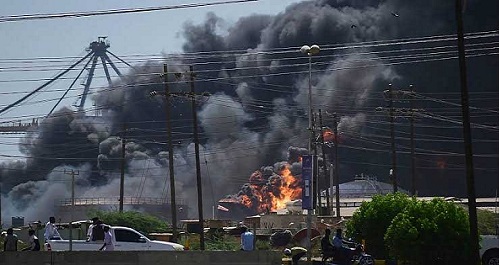
The violence spread to Abyei on Monday, when a drone struck Amiet Common Market, located approximately 10 kilometres north of Abyei town.
The region’s Information Minister, Yohana Akol Ngor, confirmed that 73 people had been killed in the attack, which also triggered fires and forced thousands of residents to flee.
“We were surprised by bombing and thick smoke inside Amiet Common Market,” Ngor told Radio Tamazuj, describing the devastation at the market.
Local officials estimated that approximately 8,000 residents were displaced as people escaped the burning commercial centre.
The destruction has also complicated rescue efforts. Ngor told Reuters that emergency workers struggled to retrieve bodies because of fires caused by the bombardment.
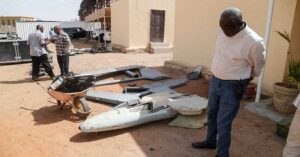
The remaining fragments of drones that keep on raining havoc on the citizens
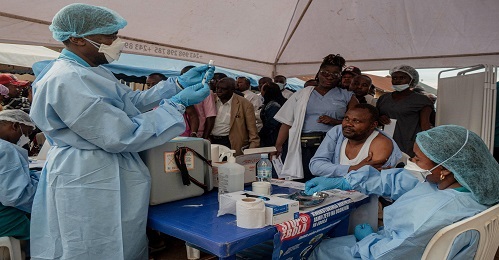
Medical charity Médecins Sans Frontières (MSF) said its teams received more than 20 wounded people at Ameth Bek Hospital in Abyei town, including patients with critical injuries and burns.
“We are providing surgical services and wound dressing, along with other emergency care,” said Christian Lindauer, MSF’s manager at the hospital.
The Sudanese military acknowledged carrying out the Abyei strike through a source who spoke to the BBC, defending the operation on the grounds that the market was allegedly being used as a fuel supply centre for the RSF.
However, the military’s justification has done little to ease diplomatic tensions, particularly because Abyei is a disputed, oil-rich territory claimed by both Sudan and South Sudan.
South Sudan’s government strongly condemned the bombing and summoned Sudan’s ambassador to lodge a formal diplomatic protest. The incident has heightened fears that Sudan’s civil war could spill across the border and further destabilise the region.
Abyei has remained a source of tension since South Sudan gained independence from Sudan in 2011, with the two countries continuing to dispute ownership of the territory.
The United Nations has also expressed alarm over the increasing use of armed drones and their devastating consequences for civilians.
“We are alarmed by the continued deadly drone strikes across the country that are killing civilians, including children, and that are disrupting essential services,” UN spokesperson Stéphane Dujarric said on Monday.
The UN warning comes as the humanitarian situation deteriorates, with approximately 20 million people facing acute hunger and the risk of famine rising in parts of Darfur and Greater Kordofan.
The wider conflict has killed hundreds of thousands of people and forced more than 14 million from their homes, creating one of the world’s worst humanitarian emergencies.
The increased use of drones has added another dangerous dimension to the fighting. Despite a partial arms embargo on Sudan, foreign countries have continued supplying both the army and the RSF with drones, which are increasingly becoming weapons of choice in the conflict.
Greater Kordofan, comprising North, South and West Kordofan, has become a strategic battleground following the army’s recapture of Khartoum from the RSF. The region connects RSF-controlled areas of Darfur to the national capital and contains valuable oil and gold resources.
The latest attacks underscore the mounting dangers facing civilians as both sides intensify military operations. With casualties mounting, communities displaced and diplomatic tensions rising, international calls for restraint are growing.
For civilians caught between the rival forces, however, the immediate challenge remains survival amid relentless attacks, collapsing essential services and dwindling access to food and medical assistance.