
HABARI DAILY I Kampala, Uganda I The Uganda Government has quickly got out of its slumber following the tragic road crash that claimed the lives of pupils and staff from King David Junior School, announcing a nationwide suspension of all school trips and educational excursions as it reviews transport safety guidelines aimed at preventing similar disasters.
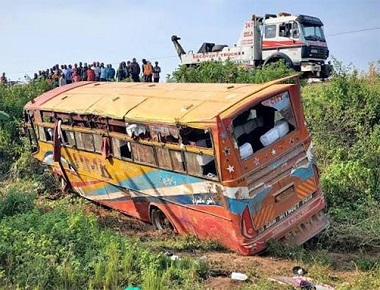
The move comes in the wake of the horrific accident involving pupils returning from an educational tour to Sipi Falls in Kapchorwa District. The crash claimed the lives of more than 20 learners and several members of staff, sending shockwaves across the country and raising fresh concerns about the safety of school transport.
The Ministry of Education and Sports, working together with the Uganda Police Force and the Ministry of Works and Transport, has launched a comprehensive review of school travel policies before allowing schools to resume educational excursions.
While the review is underway, the government has reminded schools that several safety guidelines already exist and must be strictly observed once the suspension is eventually lifted.
Condition of vehicles
Among the key areas under review is the condition of vehicles used to transport learners. The Ministry says schools will only be permitted to use roadworthy, fully licensed vehicles that have demonstrated a proven safety record.
Officials believe every bus hired for school trips should undergo thorough mechanical inspection before departure to ensure it is fit for long-distance travel.
The review is expected to introduce even stricter vehicle inspection procedures, with authorities considering stronger monitoring mechanisms to verify compliance before schools are allowed to transport learners.
Government officials say mechanical failure, which is suspected to have contributed to the Kapchorwa tragedy, highlights the importance of rigorous vehicle inspections.
Driver qualifications
Driver qualifications are another major focus of the ongoing review. The Ministry insists that only experienced and properly licensed drivers with good safety records should be entrusted with transporting schoolchildren.
Authorities are also emphasizing that drivers assigned to educational trips must be adequately rested before beginning long journeys.
Fatigue has long been recognized as a significant contributor to road accidents, particularly on lengthy trips involving difficult terrain.
The government is therefore evaluating whether additional measures should be introduced to monitor driver fitness and working hours before school excursions.
Risk assessments
Another important safety requirement concerns risk assessments. Education officials say every school planning an educational trip must conduct a comprehensive assessment of the proposed journey before learners leave the school compound.
This includes evaluating the condition of the route, identifying potential hazards, reviewing weather conditions where necessary and ensuring that all official authorizations have been obtained.
The Kapchorwa accident has demonstrated the importance of understanding the risks associated with particular roads, especially those known for steep descents or frequent accidents.
Parental involvement also remains central to the Ministry’s safety guidelines.
Schools are required to provide parents and guardians with complete information about planned educational trips before seeking their approval.
This includes details about the destination, travel itinerary, transport arrangements, accommodation where applicable and the overall purpose of the excursion.
Parental consent
Government officials say informed parental consent is essential because families have a right to understand the risks and precautions associated with any journey involving their children.
The Ministry is also reviewing supervision requirements to ensure learners are adequately monitored throughout every stage of school travel.
Existing guidelines require schools to maintain appropriate teacher-to-learner ratios during excursions so that children receive proper care and attention from departure until they safely return home.
Effective supervision
Officials say effective supervision enables teachers to respond quickly in emergencies and helps maintain discipline during long journeys.
One of the clearest rules being reinforced by the government is the prohibition of nighttime travel.
The Ministry has reiterated that schools should not transport learners during the night because darkness significantly increases road safety risks.
Reduced visibility, driver fatigue and the limited availability of emergency response services make overnight journeys particularly dangerous for schoolchildren.
Authorities say this requirement will remain a critical component of future school travel regulations.
Tougher enforcement measures
Beyond the existing guidelines, government agencies are considering introducing tougher enforcement measures to improve compliance.
The Ministry of Education, Uganda Police and the Ministry of Works and Transport are jointly evaluating new monitoring systems that would strengthen oversight of vehicle inspections and driver qualifications before educational trips receive approval.
Officials believe stronger enforcement, rather than relying solely on written regulations, will help reduce preventable accidents involving school transport.
The Kapchorwa tragedy has become a painful reminder of the devastating consequences that can result when transport safety fails.
As investigations into the crash continue, the government says its priority is to ensure that every lesson learned is translated into stronger safeguards for learners.
Official’s take
An official at the Ministry of Education that talked to Habari Daily on condition of anonymity since he no t allowed to speak to the media, said that educational tours are valuable learning opportunities, and will soon be allowed to resume under strict guidelines.
“But these tours must never come at the expense of children’s safety. Both learners and their teachers must be safe under those circumstances,” he said.
He said that by strengthening vehicle standards, tightening driver requirements, improving risk assessments, enforcing parental consent, enhancing supervision and maintaining the ban on nighttime travel, future educational trips will be conducted under much safer conditions.