
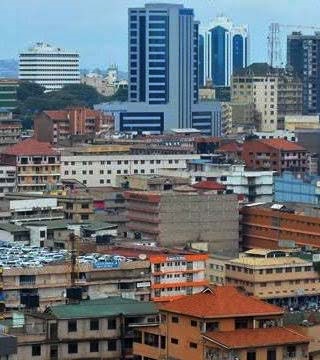
HABARI DAILY I Kampala, Uganda I The proposal to establish Nakasongola as Uganda’s new capital city is steadily moving beyond an idea on paper and into a debate about planning, money, infrastructure and political priorities. Supporters see an opportunity to build a modern administrative city from scratch, free from the congestion and disorder that have increasingly defined Kampala.
Critics, however, question whether Uganda can afford another major urban project when the country’s existing cities still struggle with inadequate funding.
At the heart of the debate is a simple but difficult question: would it be cheaper and more effective to build a new capital or fix Kampala?
For urban planning expert Kazibwe, Nakasongola presents an opportunity that Kampala can no longer easily provide — starting again.
“They have to do zoning right from day one — residential, industrial, government and green belts,” Kazibwe says.
Such planning, he argues, would allow the Government to determine how the city grows instead of allowing development to precede infrastructure, as has happened in Kampala.
The proposed city could have clearly separated residential, industrial and administrative zones, while protecting green spaces before construction begins. More importantly, planners could reserve corridors for future transport infrastructure without having to demolish buildings or displace businesses.
Kazibwe says Nakasongola could be designed from the beginning to accommodate Bus Rapid Transit (BRT), non-motorised transport, commuter rail, freight routes and utility networks.
That would be a major advantage over Kampala, where introducing modern infrastructure often involves negotiating around existing buildings, homes, businesses and underground utilities.
In a greenfield city, Kazibwe argues, transport infrastructure could be significantly cheaper because the Government would not have to spend heavily acquiring land and demolishing structures.
A multimodal transport system could also be developed, bringing together rail, buses, freight, parking and other services in an integrated network. But Kazibwe cautions that the engineering challenge is only one part of the equation.
“Engineering is only 30% of the problem. The other 70% is economics and politics,” he says.
That warning goes to the heart of the Nakasongola debate. Uganda may have the technical capacity to design a modern city, but the bigger question is whether the country has the financial resources, political commitment and economic demand to sustain it.
Lessons from elsewhere
Uganda would not be the first country to establish a new administrative capital.
Nigeria moved its political capital from Lagos to Abuja, while Lagos retained its position as the country’s commercial powerhouse. Tanzania shifted its administrative capital to Dodoma, although Dar es Salaam continues to dominate economically.
In Côte d’Ivoire, Yamoussoukro is the political capital, while Abidjan remains the country’s principal economic centre. These examples offer an important lesson: moving government does not necessarily mean replacing the existing economic capital.
Instead, a new administrative capital can become another growth pole while the original metropolis continues to thrive.
That is why Eng. Dr Apollo Buregyeya, a civil engineer, academic and industrial development advocate at Makerere University, believes Nakasongola should complement Kampala rather than replace it. “Nakasongola can complement Kampala, not replace it,” Buregyeya says.
He stresses that Uganda must first recognise the current status of the proposal. Nakasongola remains a policy discussion rather than a fully approved, costed and funded project.
And therein lies one of the biggest challenges: demand.
Buregyeya points to the 2024 census, which put Nakasongola Town Council’s population at only 10,638, compared with an estimated 5.83 million people in Greater Kampala in 2021.
A city can certainly be designed for millions of future residents. But the danger is building expensive infrastructure long before those residents arrive. “Mass transit needs mass demand,” Buregyeya says.
He recommends protecting transport corridors from the outset but starting with reliable scheduled buses before introducing dedicated BRT and other mass-transit systems as the population and economy expand.
Rail presents a similar dilemma.
Although Nakasongola has ample space for new railway infrastructure, connecting it to the existing network would require significant investment. Kampala already has a railway corridor and some passenger services, meaning that upgrading existing infrastructure could deliver benefits sooner.
The choice, therefore, is not simply between Kampala and Nakasongola.
It is a choice between investing in an established urban economy and creating another one — while finding enough money to do both.
Kampala fights back
Kampala Lord Mayor Ronald Balimwezo strongly rejects the argument that Uganda needs a new capital because of the city’s problems.
For him, the fundamental problem is not Kampala’s location but inadequate investment.
“Kampala is not just a city. It is the heartbeat of Uganda and it’s the economic hub, the cash cow,” he says.
Balimwezo argues that more than 4.5 million people live and work in Kampala and pay taxes there. Rather than abandoning that economic concentration, he believes Government should invest in making the city functional.
He says Kampala Capital City Authority requires about Sh2.4 trillion annually to implement its strategic plans and address the city’s infrastructure challenges. Yet its current budget is only about Sh950 billion to Sh1 trillion.
“How do you think that Kampala can be de-congested without you funding the capital?” he asks.
His solution is to invest in BRT, light rail, metro systems, roads and improved waste management.
Balimwezo says investors have already shown interest in major light rail projects, while others are exploring opportunities in BRT and waste-to-energy.
From his perspective, Uganda has already attempted to reduce Kampala’s dominance by establishing regional cities such as Mbarara, Gulu and Jinja. The problem, he argues, is that these cities have not received enough resources to become powerful alternative economic centres.
That raises a fundamental question: if Uganda has struggled to adequately finance existing cities, where will the money for an entirely new capital come from?
The price tag
Civil Society Budget Advocacy Group executive director Julius Mukunda believes the Government should answer that question through a transparent financial comparison.
Before committing to Nakasongola, he argues, authorities should calculate the cost of building the proposed capital and compare it directly with the cost of fixing Kampala.
International experience offers reasons for caution. Some countries have spent tens of billions of dollars developing new administrative capitals.
Mukunda also warns against assuming that public-private partnerships provide free financing.
“Public-private partnerships are not free money,” he says.
Private financing can ultimately create obligations for taxpayers through government guarantees, availability payments and other contingent liabilities.
With Uganda already facing significant public debt and debt-servicing pressures, Mukunda says the timing of such an ambitious undertaking requires careful scrutiny.
His alternative is to strengthen Kampala while continuing with decentralisation.
He argues that increasing KCCA’s allocation to Sh2.4 trillion would be considerably cheaper than building an entirely new capital and would allow Uganda to exploit the economic density that already exists in Kampala.
But he adds that increased funding must be accompanied by governance reforms.
Business sees opportunity
The private sector appears more receptive to the Nakasongola proposal.
Stephen Asiimwe, the Private Sector Foundation Uganda boss, says Uganda can learn from countries that have successfully created new administrative centres.
“The idea has worked in some places like South Africa, Tanzania, and many other countries. I would welcome it because Kampala has a lot of unplanned structures,” Asiimwe says.
His argument reflects the strongest case for Nakasongola: the opportunity to avoid repeating Kampala’s planning mistakes.
A new capital could be designed around modern transport, properly zoned neighbourhoods, industrial areas, government facilities and protected green spaces. Infrastructure could be laid out before buildings occupy the land.
But the same opportunity creates a financial risk. A beautiful master plan does not automatically create a functioning city.
For Nakasongola to succeed, Government would need to attract residents, businesses, investors and institutions. It would need reliable transport, water, electricity, schools, hospitals, security and digital infrastructure. Most importantly, it would need an economy capable of supporting the population after the initial government investment ends.
A capital or a second city?
Ultimately, Nakasongola’s feasibility may depend on how Uganda defines the project.
If the intention is simply to move government offices from Kampala to a new location, the financial and logistical burden could be enormous.
But if the project is conceived as a long-term national urban development strategy, Nakasongola could potentially complement Kampala and create a second major growth centre.
The strongest argument for Nakasongola is the ability to plan ahead. The strongest argument against it is that Uganda already has a massive urban economy in Kampala that requires urgent investment.
The country therefore faces a difficult choice: spend heavily to build a new city from the ground up, or invest substantially more in repairing and modernising the one it already has.
There may ultimately be a middle path — developing Nakasongola as a planned administrative and economic centre while transforming Kampala into a modern commercial metropolis.
But whichever path Uganda chooses, the figures must come before the grand vision.
As Kazibwe puts it, engineering may account for only 30 per cent of the challenge. The remaining 70 per cent — economics and politics — could determine whether Nakasongola becomes Uganda’s next great city or simply another ambitious project that never reaches its full potential.







About the Author