
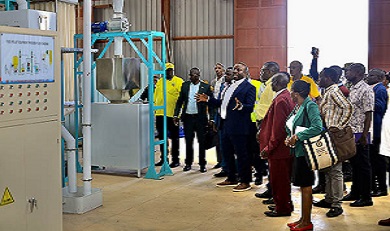
Eng Kamugisha explaining how the Industrial Skilling Hub works, to Sebei leaders
HABARI DAILY I Kampala, Uganda I The Uganda Government, through State House, has invested Shs1 billion in a modern value-addition facility at the Sebei Zonal Presidential Industrial Skilling Hub in Kween District, strengthening efforts to increase farmers’ incomes, reduce post-harvest losses and promote agro-industrialisation in the Sebei sub-region.
The investment includes a maize milling plant, an animal feed processing unit and modern grain silos, all procured from China. The equipment has successfully undergone initial testing and is expected to process maize, soya and other grains produced in the region.
The value-addition project is an extension of the Presidential Industrial Skilling Hub programme introduced by President Yoweri Kaguta Museveni following the success of vocational training centres established to equip vulnerable and unemployed youth with practical skills.
The skilling hubs have trained thousands of young Ugandans in various trades while supporting graduates with start-up capital through hub SACCOs to establish their own businesses.
Building on the programme’s achievements, the Government has expanded the initiative by establishing value-addition facilities in 11 of the country’s 19 Presidential Industrial Skilling Hubs.
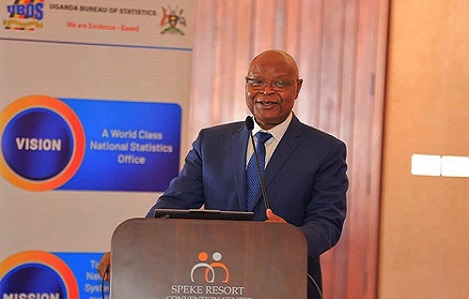
Speaking on Friday, 24th July 2026, during a stakeholders’ engagement on the progress of the Sebei Zonal Presidential Industrial Skilling Hub, Eng. Raymond Kamugisha, the Director of Projects and Presidential Industrial Hubs at State House, said the Government had invested at least Shs1 billion in each of the selected hubs.
He said the facilities are intended to transform agricultural production into commercial enterprises capable of generating higher incomes for farming communities.
“Value addition is not only happening in Sebei but in 11 hubs across the country. This is a significant investment, and communities must embrace and utilise these facilities to improve their livelihoods,” he said.
He explained that Sebei was selected because of its high maize production and expanding livestock sector.
According to Eng. Kamugisha, the milling plant has the capacity to process 10 tonnes of grain per day, mainly maize and soya, while the silos can store up to 500 metric tonnes of grain.
Besides processing agricultural produce, the facility will train farmers in proper post-harvest handling, grain storage and quality management to minimise losses and improve the competitiveness of Uganda’s agricultural products.
“We have been poor in post-harvest handling. With these facilities, farmers will be taught good practices, enabling our agricultural products to compete favourably on the international market,” he noted.
He added that the animal feed processing unit would reduce Uganda’s dependence on imported livestock feeds, particularly from neighbouring Kenya.
“We shall no longer have to import all our animal feeds from Kenya. They will be produced here using locally available materials,” he said.
Eng. Kamugisha said the industrial hubs are gradually being transformed into self-sustaining institutions capable of producing food and other essential supplies for the Government, especially during emergencies and national crises.
He also revealed plans to establish a Four-Acre Model demonstration farm at the hub to train surrounding communities in modern commercial agriculture.
The demonstration farm will showcase enterprises such as beef cattle, coffee, bananas and other high-value crops suitable for the Sebei region.
He encouraged residents to embrace commercial coffee growing, saying properly managed coffee plantations have the potential to significantly improve household incomes.
“Leaders must aspire to learn, and when they learn, they should inspire others to get out of poverty. The President has repeatedly advised Ugandans to embrace the Four-Acre Model, and we must now implement it,” he said.







About the Author