
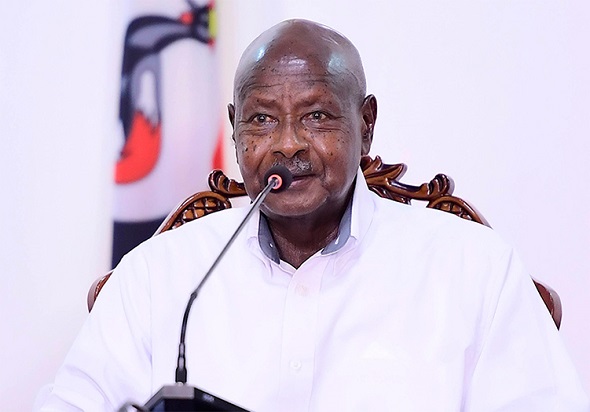
President Yoweri Museveni during the national address today, Wednesday, 10th June 2026
HABARI DAILY I Kampala, Uganda I President Yoweri Museveni has issued a stern warning to pastors and other religious leaders against touching worshippers during prayers and faith-healing sessions, saying such practices could accelerate the spread of Ebola as Uganda works to contain the ongoing outbreak.
Addressing the nation live on television, radio and social media platforms, Museveni emphasized that preventing physical contact remains one of the most effective ways of stopping transmission of the deadly virus. He specifically cautioned religious leaders who often lay hands on congregants during prayers, urging them to adjust their practices in the interest of public health.
“If you pray, God is not deaf. You pray without touching,” Museveni said in one of the strongest messages directed at religious institutions since the outbreak was declared.
The President’s address came as Uganda continues to manage a localized outbreak of the Bundibugyo strain of Ebola, with health authorities reporting that the situation remains under control despite concerns about cross-border transmission from the Democratic Republic of Congo (DRC).
According to figures provided by the Ministry of Health and the World Health Organization (WHO), Uganda has recorded 19 confirmed Ebola cases. Of these, 14 cases involve members of a single family that crossed into Uganda from the DRC, while the remaining five infections are Ugandans who came into contact with the family. Four of the locally infected individuals are frontline health workers involved in caring for patients.
2 confirmed dead
Current statistics show that 12 patients remain under medical care, five people have recovered and been discharged, while two deaths have been recorded. Health officials have stressed that there is currently no confirmed community transmission within Uganda, as all identified cases have been traced back to the imported infections.
Museveni used the address to educate citizens about how Ebola spreads and to reinforce measures aimed at breaking the chain of transmission. He urged Ugandans to avoid all unnecessary physical contact, including handshakes, hugging and other forms of close interaction that could expose individuals to bodily fluids from infected persons.
The President emphasized that Ebola is highly dangerous but manageable if citizens strictly adhere to public health guidelines.
In addition to avoiding physical contact, Museveni warned against the consumption of wild meat. He specifically mentioned monkeys and other wild animals as potential carriers of the virus, urging communities to refrain from hunting, handling or eating wildlife.
No nationwide lockdowns, yet
Despite the outbreak, the President reassured citizens that the government has no plans to impose nationwide lockdowns or restrictions on movement.
“There will be no lockdowns,” he said, explaining that Ebola differs from airborne diseases because transmission occurs through direct contact with infected individuals or contaminated materials. As long as people observe standard operating procedures, he noted, economic activity can continue.
However, targeted preventive measures have been introduced in high-risk areas. While Uganda’s borders remain open for regulated travel, all travelers are subjected to mandatory temperature screening and health monitoring.
The government has also temporarily suspended market operations in some areas along the Uganda-DRC border where large numbers of people from both countries frequently gather and intermingle. Officials believe these localized measures will help reduce the risk of cross-border transmission without disrupting national economic activity.
WHO Director-General’s counsel
The national address followed a high-level meeting at State House Entebbe between President Museveni and WHO Director-General, Tedros Adhanom Ghebreyesus, who recently visited Uganda to assess the response efforts.
During the meeting, Dr. Tedros reportedly commended Uganda’s handling of the outbreak and praised the government’s decision to suspend this year’s annual Uganda Martyrs Day celebrations at Namugongo Martyrs Shrine.
The event, which typically attracts more than three million pilgrims from Uganda and across the region, was viewed as a potential super-spreader gathering. Health experts believe its suspension significantly reduced the risk of widespread transmission.
Meanwhile, Uganda’s Ministry of Health is implementing additional regional interventions aimed at containing the outbreak at its source. Plans are underway to establish four strategic medical camps just inside the DRC border. The facilities will provide treatment to Congolese patients closer to their communities, reducing the need for potentially infected individuals to travel into Uganda in search of medical care.
Museveni also appealed to citizens experiencing symptoms such as fever, severe headache, unexplained weakness or other signs associated with Ebola to immediately contact health authorities. He advised suspected patients against using public transport, taxis or boda-bodas, stressing that official medical teams and ambulances should handle transportation to treatment facilities.
As Uganda continues its fight against Ebola, health authorities remain optimistic that strict adherence to preventive measures, early detection and community cooperation will help contain the outbreak and prevent wider transmission.







About the Author