
National celebrations were slated for Buikwe District today, at Bishop Nkoyoyo Primary School grounds in Matale. The annual event, observed globally as a tribute to the dignity of labour and the rights of workers, will this year be held under the theme: “Safeguarding Uganda’s Progress: Empowering the Workforce and Promoting Decent Work for Competitive Enterprises.”
Speaking ahead of the celebrations, the Minister of Gender, Labour and Social Development, Betty Amongi, underscored the significance of this year’s theme in the context of Uganda’s ongoing socio-economic transformation.
“International Labour Day is not merely a ceremonial occasion,” she said, adding that it is a time for reflection on the invaluable contribution of workers to Uganda’s development, the challenges they continue to face, and the urgent need to strengthen systems that protect their rights and enhance their productivity.
This year’s theme calls upon all stakeholders to safeguard the progress we have made by investing in our workforce and ensuring that work is not only available, but also decent and productive.”
Labour market
Uganda’s labour market presents both opportunities and challenges. According to the 2024 National Population and Housing Census, the country’s population stands at approximately 45.9 million, with more than 73 percent under the age of 30.
The working-age population accounts for 57.4 percent, translating to over 25 million people. However, unemployment remains a concern at 12.3 percent, while more than 4 million young people are classified as Not in Employment, Education or Training (NEET).
The State Minister for Labour and Industrial Relations, Esther Davinia Anyakun, emphasized the urgency of addressing youth unemployment and underemployment.
“Our young people represent Uganda’s greatest asset, but also our greatest responsibility,” she said, adding that while Government has registered improvements in employment trends over the years, the persistence of informality, underemployment, and skills mismatches continues to limit the full potential of our labour force.
“Through targeted programmes such as the National Apprenticeship Programme, we are equipping young Ugandans with practical, market-relevant skills to transition into gainful employment,” she said.
Anyakun said that one flagship initiative is the National Apprenticeship Programme, designed to equip young Ugandans with practical, market-relevant skills rather than classroom credentials alone.
“Since 2022, the government says it has supported 1,134 apprentices and 242 graduate volunteers. Most notably, the programme has recorded an employment transition rate of 71.73 %,” she said.
That means roughly seven in ten participants moved into work after the programme, a strong signal in a labour market where many graduates struggle to convert qualifications into jobs.
The minister further noted that the scheme will expand placements across districts, cities and municipalities. “If scaled effectively, apprenticeships could help close one of Uganda’s most persistent gaps: employers demanding experience while job seekers cannot gain experience without first being hired.”
The second priority is the informal economy, since nearly 88% of Uganda’s workforce operates informally, according to the Gender ministry. That means job policy cannot focus only on corporate offices or industrial parks. It must reach mechanics, tailors, welders, market traders, roadside manufacturers and family enterprises.
That is where the Jua-Kali Programme comes in. Named after the East African phrase associated with the informal sector, the initiative aims to help small, often unregistered businesses transition into formal growth.
Formalisation can mean easier access to credit, training, markets and legal protections. For the government, it can also broaden the tax base and improve productivity.
International Labour Day traces its origins to the historic 1886 Chicago workers’ strike in the United States, where more than 400,000 labourers demanded an eight-hour workday.
The protest, which turned violent after police confronted unarmed demonstrators, became a defining moment in the global labour movement. Since then, May 1 has evolved into a worldwide commemoration of workers’ struggles and achievements.
Despite a gradual decline in unemployment rates over the past decade, a significant proportion of Ugandans remain engaged in informal and vulnerable work.
The informal sector accounts for approximately 85 percent of total employment and contributes about 54.5 percent of the country’s Gross Domestic Product. This reality presents a major policy challenge, as many workers in the informal economy operate without adequate legal protection or access to social security.
Aggrey David Kibenge, the Permanent Secretary in the Ministry of Gender, Labour and Social Development, highlighted the risks associated with informality and the need for stronger labour protections.
“A large segment of our workforce operates in conditions that expose them to exploitation, unsafe workplaces, and income insecurity,” Kibenge said.
“Reports indicate that many workers are exposed to hazardous environments, including dust, fumes, and harmful chemicals, while others face non-payment of wages and various forms of workplace abuse.
Addressing these challenges requires strengthening labour inspection systems, enhancing awareness of workers’ rights, and expanding social protection mechanisms.”
Social protection coverage in Uganda remains limited. Although 3.2 million workers are registered under retirement benefit schemes, only about 771,000 accounts are active.
Similarly, the number of formal employees contributing Pay-As-You-Earn taxes has remained below 800,000 over the past decade, highlighting the narrow base of formal employment.
At the same time, Uganda continues to make strides in economic growth and development. The size of the economy has expanded significantly, from Shs 64.8 trillion in 2010/11 to over Shs 202 trillion in 2023/24.
The proportion of households engaged in subsistence agriculture has declined, while investments in infrastructure, education, and healthcare have improved living standards.
Amongi noted that these achievements must be consolidated through deliberate investment in human capital.
“We have made commendable progress as a country, but sustaining this progress requires a workforce that is skilled, healthy, and protected,” she said. “Decent work is not just a social imperative; it is an economic strategy.
It drives productivity, supports enterprise growth, and enhances national competitiveness.” Labour productivity, however, remains below national and global benchmarks.
In 2021, Uganda’s GDP per person employed stood at approximately $6,162 in purchasing power parity terms, compared to $10,278 for Sub-Saharan Africa and over $41,000 globally.
Experts attribute this gap to limited access to technology, low levels of industrialisation, and a shortage of skilled labour. To address these challenges, the government has rolled out several strategic interventions.
These include the operationalisation of the Minimum Wages Advisory Board, expansion of the National Apprenticeship Programme, and implementation of the Jua-Kali initiative aimed at formalising informal enterprises.
Plans are also underway to establish a National Productivity and Competitiveness Centre to coordinate efforts aimed at improving workforce efficiency and enterprise performance.
Anyakun stressed that these interventions are designed to create a more inclusive and resilient labour market. “Our goal is to ensure that every Ugandan has access to opportunities for productive employment,” she said.
“This involves not only creating jobs, but also improving the quality of those jobs through better wages, safer working conditions, and access to social protection.”
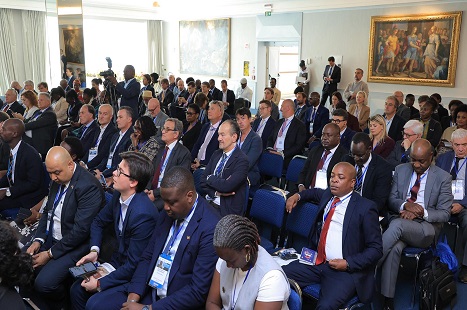
In the lead-up to Labour Day, a series of activities have been organised to engage stakeholders and raise awareness about labour issues.







These include a national labour conference and expo held in Kampala, workplace inspections, tree-planting initiatives in Buikwe District, and public awareness campaigns through various media platforms.
About the Author