
HABARI DAILY I Kampala, Uganda I Although its being known as one of the youngest countries in the world, Uganda still faces significant gaps in detailed, nationally representative information about the lives and circumstances of its women and children.
That information gap could soon narrow as Uganda prepares to conduct its first full Multiple Indicator Cluster Survey (MICS), a nationwide household survey expected to provide a comprehensive picture of children and women across the country.
The United Nations Children’s Fund (Unicef) has committed $3 million (about Shs11 billion) to support the exercise, which will be implemented by the Uganda Bureau of Statistics (UBOS).
The survey is expected to collect detailed information on children’s health, nutrition, education, protection, water and sanitation, as well as other indicators that affect household welfare.
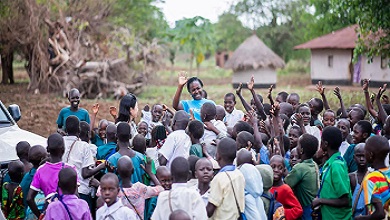
The exercise is particularly significant because the 2024 National Population and Housing Census established that children account for nearly half of Uganda’s population of more than 45 million people.
Filling a critical information gap
Unicef’s MICS programme was launched in the 1990s and has since been implemented in more than 120 countries. Uganda, however, has never conducted a full MICS, instead relying largely on the Uganda Demographic and Health Survey (UDHS) and other national surveys.
The UDHS has traditionally provided important nationally representative information on fertility, population trends, maternal and child health, nutrition and mortality.
MICS will complement those surveys by generating a much broader range of information specifically focused on the wellbeing of children and women.
Stella Ogalo, a social protection specialist at Unicef Uganda, said the organisation would provide both technical and financial support for the exercise.
“Unicef will support both technically and financially, in the absence of the UDHS, and this is expected to run for about 18 months,” Ogalo said.
She said the process is still at an early stage and that the committed funds had not yet been disbursed.
Field data collection is expected to take place during the 2026/27 financial year, followed by data processing, analysis and production of the final report.
US funding withdrawal creates gap
The survey comes at a time when Uganda’s national data collection programmes are facing funding challenges.
The withdrawal of United States Agency for International Development (USAID) support in 2025 disrupted a number of health, research and population programmes, creating a financing gap for surveys traditionally conducted with support from development partners.
The disruption has affected demographic and health surveys in several countries, with some programmes delayed or cancelled and researchers, field workers and administrative staff losing employment.
The $3 million Unicef commitment is therefore expected to help Uganda maintain an important stream of population and social data at a time when external development financing is under pressure.
Uganda already conducts other major surveys, including the Uganda National Household Survey and the Labour Force Survey, but officials say MICS will provide a more detailed assessment of the situation of children and women.
Data to guide national planning
The survey will also be important for measuring Uganda’s progress under its development commitments.
The country is implementing National Development Plan IV for 2025/26-2029/30, which is aligned with Vision 2040, the African Union’s Agenda 2063 and the Sustainable Development Goals.
MICS indicators will provide evidence that can help Government assess whether programmes targeting vulnerable households are producing the intended results.
The announcement was made during a panel discussion organised by the Equal Opportunities Commission (EOC) at its headquarters in Kampala.
More than 60 officials participated, representing Government ministries, UBOS, the United Nations Population Fund (UNFPA), the National Planning Authority, Uganda Human Rights Commission, ChildFund Uganda and the National Youth Council, among others.
Concern over children left behind
Susan Atukunda, principal research officer at the EOC, said the value of Uganda’s young population will depend on whether children receive equitable access to essential services.
“Our concern is not only whether Uganda is investing in children, but whether that investment is reaching them equitably,” Atukunda said.
Her concern reflects the challenge posed by Uganda’s rapidly growing population. While the large number of young people presents an opportunity for economic growth through a demographic dividend, poor access to education, healthcare, nutrition and other basic services could turn the demographic advantage into a burden.
Florence Mpabulungi Tagoola, a UNFPA programme specialist in data and population dynamics, highlighted school dropout, particularly among girls, as one of the issues requiring urgent attention.
“If we leave this big population outside development, we will have missed the opportunity,” she said.
Tagoola also pointed to teenage pregnancy as a factor pushing many girls out of school and called for greater investment in keeping children, especially girls, in education.
Establishing where the needs are greatest
Gender ministry youth and children affairs commissioner Franco Tollea urged policymakers to use reliable evidence when planning and allocating public resources.
He cited districts such as Napak in Karamoja, where children continue to face challenges accessing safe water and quality education.
This is where the MICS data could prove crucial. Instead of relying mainly on broad national averages, policymakers will be able to identify disparities between regions, communities and population groups.
According to Unicef, Uganda’s first full MICS will produce nationally representative information on children’s health, nutrition, education, protection, water and sanitation.
The ultimate objective is therefore not simply to establish how many women and children live in Uganda, but to understand how they live, what services they can access and which groups are being left behind.
For Uganda, having accurate household-level evidence will be essential to ensuring that the country’s development plans translate into tangible improvements in the lives of its largest population group.







About the Author