
With the legal battle steaming between interested parties in the succession battle, the deepening dispute over who should succeed the late King Oyo Nyimba Kabamba Iguru Rukidi IV is increasingly exposing the limits of the courtroom as a solution to a conflict rooted in culture, custom, family ties and royal tradition.
The government has pointed the protagonists towards the courts, with Attorney General Sam Mayanja advising President Yoweri Museveni that the late king’s will should be respected unless it is successfully challenged in court. He has also maintained that the competing claims over Oyo’s successor should be subjected to judicial determination.
But events surrounding Oyo’s burial at the Karambi Royal Tombs suggest that a court ruling alone may not be enough to heal the divisions within Tooro.
Burial truce collapses
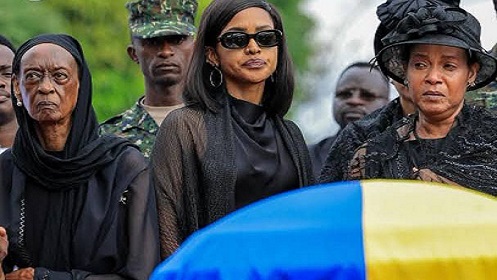
The convoy carrying Oyo’s body was heading to Karambi when a carefully negotiated truce began to unravel.
Queen Mother Best Kemigisa was in the vehicle carrying her son’s body and expected to accompany him to his final resting place. At the same time, Musuuga Charles Kayondo Kamurasi, head of the Babiito royal clan, appeared to have agreed to a government-backed memorandum of understanding intended to keep the succession dispute away from the burial.
The agreement, signed by representatives of government, Kemigisa, the Musuuga and the Babiito royal clan, expressly prohibited succession-related activities at the tombs.
It stated that no succession-related ritual, declaration, installation, proclamation or other act intended to recognise or advance a claimant should take place during the burial.
It also provided that no person actively contesting or claiming the throne should be allowed into the Royal Tombs.
Yet Prince Edward Rukidi Nyabongo I, the claimant selected by the Royal Succession Committee, was at Karambi.
When Kemigisa discovered his presence, she objected and appealed for the agreement to be respected. Security prevented her from entering the burial area, forcing the Queen Mother to leave while Kamurasi remained.
The ensuing events demonstrated why the succession crisis may be much bigger than a legal dispute.
Nyabongo performed the traditional ritual of dropping coffee beans into Oyo’s grave, with Kamurasi overseeing the proceedings.
The coffee-bean ritual was particularly important because Mayanja had advised that it be suspended until the succession dispute was legally resolved. In his view, proceeding with it would effectively amount to recognising a successor before the competing claims had been settled.
Nevertheless, the ritual went ahead.
Law versus tradition
The Karambi incident illustrates the fundamental difficulty facing the government and the courts. The legal question may be relatively straightforward: what does Oyo’s will provide, and does that will have legal force? If the document is challenged, a court can examine its authenticity, interpretation and applicability.
But the Tooro throne is not merely a legal asset to be distributed through an ordinary succession proceeding.
It is also a cultural institution whose legitimacy is deeply connected to Babiito traditions, clan authority and customary rituals.
The Babiito elders maintain that they followed established Tooro customs when selecting a successor. The Royal Succession Committee initially selected Prince George Desmond Kamurasi, who later declined the throne, before choosing Prince Edward Rukidi Kijanangoma.
Kemigisa and members of Oyo’s immediate family have challenged that process, arguing that Oyo left a will providing for his biological son to succeed him.
Princess Ruth Komuntale, Oyo’s sister, has also called for the succession process to be halted until the will and the claim of an heir are considered.
A court can determine legal rights, but it cannot easily manufacture consensus among royal families and clan elders who disagree over which customs should prevail.
A kingdom divided
Oyo died in Dallas, Texas, on August 27 at the age of 34, bringing to an end a more than three-decade reign that began when he was only three.
His death has therefore created not simply a vacancy on the throne, but a contest over the interpretation of the institution he inherited.
The controversy has placed Kemigisa on one side and sections of the Babiito establishment on the other, despite the enduring family relationship between them.
Ironically, Kamurasi has sought to separate the succession disagreement from his relationship with the Queen Mother.
He has pledged to protect and care for Kemigisa, saying that although she currently has no formal role in the succession structure, she remains part of the royal family.
“Currently she has no role, but she is our mother. She is both the king’s wife and the king’s mother,” Kamurasi said.
“It is our responsibility to protect her and look after her.”
His remarks underscore the complexity of the dispute. The people fighting over the throne are not necessarily strangers. They are members of the same royal establishment, bound by relationships that will continue long after any court case has ended.
Courts can decide, but cannot reconcile
The government has already indicated that it will not gazette Kijanangoma as King of Tooro until the succession dispute is resolved.
That position may give the courts an important role in determining the legal status of the competing claims. However, a judgment declaring one claimant legally entitled to the throne may not automatically persuade those who believe customary authority has been ignored.
The events at Karambi provide the clearest warning. A government-brokered agreement failed to prevent a traditional succession ritual from taking place, despite the legal advice that the ritual should await a court determination.
This means that the real solution may ultimately have to go beyond litigation.
Tooro needs a process capable of bringing together the Queen Mother, Oyo’s immediate family, the Babiito clan, elders, the claimant and government representatives to establish common ground on both the legal and customary dimensions of succession.
The courts may determine who has the stronger legal claim. They may not, by themselves, determine who commands the cultural legitimacy and acceptance necessary to unite Tooro.







About the Author