
Ramathan Ggoobi
HABARI DAILY I Kampala, Uganda I Finance ministers from member states of the East African Community have agreed to present their national budgets on the same day, marking a significant step toward deeper economic integration and the long-term goal of establishing a regional monetary union.
The decision was reached during the 18th Meeting of the Sectoral Council on Finance and Economic Affairs (SCFEA), held in Arusha, Tanzania, from May 11 to 15, 2026. The ministers agreed that all partner states will read their FY2026/27 national budgets on June 11, 2026, in a coordinated move designed to strengthen fiscal policy alignment, harmonize taxation systems and enhance economic resilience across the region.
The synchronized budget reading reflects a major policy shift within the East African bloc, moving beyond broad declarations of regional cooperation toward practical policy implementation. Officials say the coordinated approach is intended to ensure that member states pursue common economic objectives while reducing policy inconsistencies that often hinder trade and investment.
East African Monetary Union
A key motivation behind the decision is the pursuit of macroeconomic convergence, a critical requirement for the establishment of the proposed East African Monetary Union. By aligning fiscal calendars and budget planning processes, member states hope to improve their ability to meet agreed economic targets, including maintaining inflation below eight percent, fiscal deficits below three percent of Gross Domestic Product, and foreign exchange reserves equivalent to at least 4.5 months of imports.
The ministers noted that several countries, including Uganda, Tanzania and Rwanda, have already managed to keep inflation within the agreed convergence thresholds, demonstrating growing macroeconomic discipline across the region.
Measurable outcomes
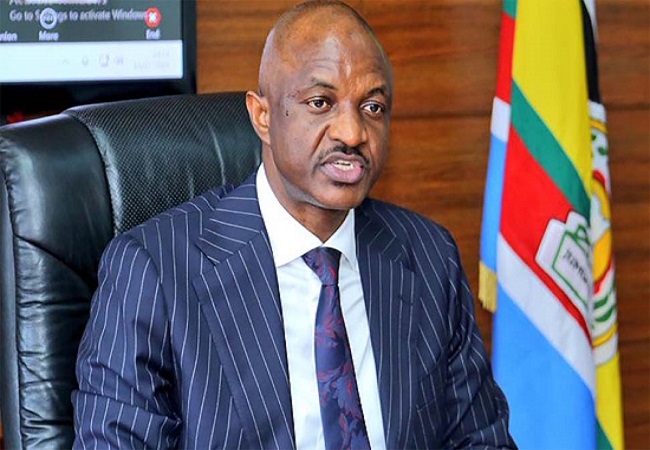
Uganda’s Acting Minister of Finance, Planning and Economic Development, Ramathan Ggoobi, who chaired the meeting, emphasized the importance of translating regional commitments into measurable outcomes that directly benefit citizens.
He stressed that sustainable financing, stronger institutional capacity and effective coordination among partner states will be essential if the region is to realize the full benefits of integration. According to Dr. Ggoobi, East Africans expect tangible gains from the integration agenda, including increased trade, employment opportunities, investment flows and improved living standards.
Another major reason behind the synchronized budget presentation is the desire to harmonize domestic tax policies. Differences in tax structures across member states have often created distortions in regional trade, encouraged smuggling and made it difficult for businesses operating across borders to compete on equal terms.
By announcing tax measures simultaneously, governments will be able to align policies more effectively, reducing loopholes that can be exploited by traders and ensuring greater consistency within the Common Market. Ministers reported progress in harmonizing excise duty frameworks and aligning the treatment of locally manufactured goods with commitments under the EAC Customs Union.
Economic analysts believe that tax harmonization will significantly improve the business environment across East Africa by reducing uncertainty and lowering the cost of compliance for companies operating in multiple jurisdictions.
Global economic shocks
The coordinated budget approach is also intended to strengthen the region’s ability to withstand global economic shocks. In recent years, East African economies have faced challenges ranging from geopolitical tensions and supply chain disruptions to climate-related shocks and fluctuating commodity prices.
Through a unified budget framework, partner states hope to demonstrate collective commitment to sustainable financing, domestic revenue mobilization, regional security and digital transformation. These priorities were captured in the common regional budget theme adopted by the ministers for FY2026/27: “Deepening Regional Integration and Economic Resilience through Improved Regional Security, Domestic Revenue Mobilisation and Digital Transformation for Inclusive Growth.”
The meeting reviewed the region’s economic outlook and noted continued recovery despite uncertainties in the global economy. Uganda reported economic growth of 6.7 percent during the first half of FY2025/26, compared to 5.8 percent during the same period in the previous year, driven by strong performance in agriculture, industry and services.
Ministers also agreed that strengthening public financial management systems will be essential for sustaining economic stability and attracting investment. Discussions focused on harmonizing fiscal frameworks, treasury management systems, commitment controls and budget credibility mechanisms across the region.
The council further called for reforms aimed at securing predictable and equitable financing for regional institutions, arguing that sustainable funding is necessary for the successful implementation of integration programs.
Observers view the decision to read budgets on a common date as one of the most concrete demonstrations yet of East Africa’s commitment to economic integration. By aligning fiscal policies, harmonizing taxes and coordinating economic planning, the region hopes to boost intra-regional trade, facilitate the free movement of goods, services and capital, and lay a stronger foundation for a future single currency.
For East Africa, June 11 will therefore represent more than a budget day. It will symbolize a collective commitment by partner states to pursue a shared economic future built on coordination, stability and deeper regional integration.







About the Author