
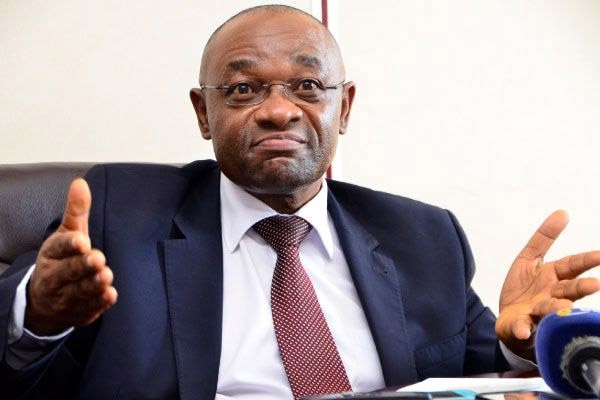
Raphael Magyezi
HABARI DAILY I Kampala, Uganda I Fear and panic has hit local government leaders across Uganda as they prepare for an imminent transition as the government confirmed that their tenure will officially expire on May 12, 2026. This will mark the end of a five-year leadership cycle that has shaped service delivery at grassroots level.
In a directive issued by Raphael Magezi, the Minister of Local Government, all district chairpersons, city mayors, municipal leaders and lower council officials have been instructed to begin formal handover processes to pave way for newly elected leaders.
“Following the recently concluded general election, the term of office of the current local government councils will expire on May 12. Accordingly, outgoing chairpersons are required to prepare comprehensive handover reports and hand over all government assets in their possession,” Magezi stated in a letter dated April 13.
The transition will be guided by Constitution of the Republic of Uganda, specifically Article 291(2), which provides that newly elected local government councils must assume office between May 13 and May 29, 2026. Chief Administrative Officers (CAOs) and town clerks have been tasked with ensuring a smooth and lawful transfer of power.
While the directive sets a clear roadmap, it has also triggered anxiety among some outgoing leaders, particularly those who lost in the recent elections and now face an abrupt end to their political careers and influence.
Uganda’s local government system, established under the decentralisation policy of the 1990s and anchored in the Local Governments Act, gives significant administrative and political authority to district and municipal leaders. For many, the offices have not only been platforms for public service but also sources of livelihood and political identity.
However, others appear ready to exit gracefully. Jackson Wekweika, the outgoing Namisindwa District chairperson, who lost his seat to Emma Bwayo, said he is prepared for the transition.
“What would prevent me from handing over? I will hand over to my brother. It is something I am accustomed to,” Wekweika said, noting that he had previously served in an interim capacity and understood the nature of political transitions.
Similarly, Prosper Twebaze, a journalist-turned-politician who won the Bushenyi District LC5 seat, said preparations to assume office are already underway, signaling readiness among incoming leaders to take charge.
Despite such assurances, the looming exit has raised broader concerns about the welfare of outgoing leaders. Unlike civil servants, most elected local government officials do not receive long-term retirement benefits, leaving many uncertain about their next steps after leaving office.
The situation mirrors developments at the national level, where Amos Lugolobi recently revealed that Members of Parliament and ministers will receive half pay for the transition month, highlighting the financial adjustments that often accompany political turnover.
Analysts say the transition period is critical not only for accountability but also for continuity of government programmes, especially in sectors such as health, education and infrastructure that are largely implemented at local levels.
Magezi commended outgoing leaders for their contribution to national development, particularly under the ruling government, noting that their efforts have been instrumental in advancing service delivery and responding to citizens’ needs.
“The tireless efforts of your leadership contributed immensely to the achievements of government and to responding to the aspirations of the people of Uganda,” he said.
As the May deadline approaches, attention is now turning to how effectively the handover process will be conducted. Observers warn that poor documentation, incomplete asset transfer and lack of cooperation could disrupt service delivery in some districts.