
Gen. Muhoozi Kainerugaba
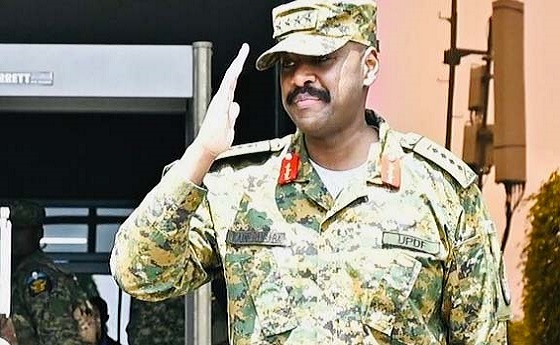
HABARI DAILY I Kampala, Uganda I As the race for stability in Uganda’s youngest pressure group picks up pace, Gen. Muhoozi Kainerugaba has embarked on one of the most significant leadership restructurings in the history of the Patriotic League of Uganda (PLU), a move that is expected to redefine the organisation’s direction ahead of the 2026 general elections and strengthen its alignment with the government’s economic agenda.
The sweeping reshuffle, announced on Monday, saw the replacement of long-serving Secretary General Daudi Kabanda with former legislator and longtime Muhoozi ally, Hon. Fadil Twalla.
The changes also included a major overhaul of the PLU Central Committee, with only four members of the outgoing leadership retained, signalling a deliberate effort by Muhoozi to build what he described as a fresh team capable of addressing the organisation’s evolving challenges.
Twalla’s appointment marks the most consequential change in the restructuring. In announcing the decision, Muhoozi praised Kabanda for his contribution over the past three years, describing his tenure as exemplary and crediting him with setting a high standard for the position. Nevertheless, the decision to replace one of PLU’s most visible mobilisers underscores the chairman’s determination to consolidate influence and reposition the movement for a new phase of growth.
The transition is expected to happen immediately, with PLU National Vice Chairman Michael Nuwagira, popularly known as Toyota, directed to organise a formal handover ceremony. Significantly, Muhoozi ordered all PLU-aligned ministers and Members of Parliament to attend, a directive that demonstrates the importance attached to the leadership change and the desire to project unity during the transition.
Beyond the Secretary General’s office, the restructuring has dramatically altered the composition of the Central Committee. Only Michael Nuwagira, Edwin Karugire, Michael Mawanda and Andrew Mwenda survived the purge of the previous leadership structure. Several influential figures, including State Ministers Balaam Barugahara and Lillian Aber, businessman Frank Gashumba and veteran mobiliser Henry Basaliza, were omitted from the new arrangement.
At the same time, Muhoozi expanded the committee by bringing in a number of senior government officials and influential political actors. Speaker of Parliament Jacob Marksons Oboth and Deputy Speaker Thomas Tayebwa were appointed as Special Envoys to Parliament, while Defence Minister Kiryowa Kiwanuka was named Vice Chairman for Buganda. Trade Minister Sanjay Tanna was brought on board as the representative of the business community, while Agriculture Minister Frank Tumwebaze and NRA historical representative Kwame Ruyondo were also added to the leadership structure.
The inclusion of high-profile government officials points to a strategic shift in PLU’s role. What began primarily as a civic mobilisation platform is increasingly positioning itself as a vehicle for policy advocacy and national development engagement. By drawing ministers, parliamentary leaders and influential stakeholders into its top decision-making organ, PLU appears to be creating stronger links between its grassroots mobilisation activities and government programmes.
Perhaps the most significant implication of the reshuffle lies in Muhoozi’s explicit connection between the organisation’s future mission and President Yoweri Museveni’s economic ambitions. Muhoozi has tasked the new leadership with supporting the government’s objective of growing Uganda’s economy to a projected GDP of $500 billion by 2031. He further warned that he would personally supervise government departments to ensure that they contribute effectively towards achieving that target.
This shift suggests that PLU is increasingly seeking to position itself not merely as a political pressure group but as a movement focused on national transformation and economic mobilisation. The integration of ministers responsible for trade, agriculture and defence reflects an intention to connect political organisation with economic performance, investment promotion and service delivery.
The timing of the reshuffle is equally significant. With the 2026 general elections drawing closer, the changes provide Muhoozi with an opportunity to strengthen internal cohesion, refresh the movement’s image and consolidate loyalists around a common agenda. The appointment of Twalla, widely regarded as a trusted ally, reinforces perceptions that Muhoozi is building a tighter inner circle capable of executing his strategic vision with greater discipline.
For Kabanda, the development comes amid speculation about his political future following recent public statements expressing frustration with active politics. While his removal from the influential post may raise questions among supporters, Muhoozi’s public praise suggests the departure was framed as part of a broader organisational restructuring rather than a repudiation of his contribution.
As more appointments to the Central Committee are expected in the coming weeks, the latest changes reveal a PLU leadership intent on renewal, consolidation and greater engagement with Uganda’s national development agenda.
Whether the restructuring succeeds in strengthening the movement’s influence and effectiveness will likely become clearer as the organisation transitions into its next phase ahead of the country’s crucial electoral cycle.







About the Author