
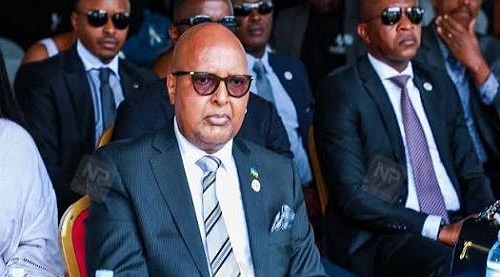
Col. Joseph Rutabana
HABARI DAILY I Kampala, Uganda I The Stephen Nuwagaba saga is continuing to unravel after Rwanda’s High Commissioner to Uganda, Col. Joseph Rutabana, categorically denied allegations that the Rwandan High Commission in Kampala played any role in the alleged torture and maiming of the young man whose claims have sparked an intense political and security debate.
Speaking before President Yoweri Museveni released his detailed statement defending Nuwagaba, Rutabana dismissed social media reports linking the Rwandan diplomatic mission to the alleged abuse, insisting neither he nor the embassy had ever interacted with Nuwagaba.
“This has never happened and it can never happen,” Rutabana said when asked about allegations circulating online that Nuwagaba had been tortured inside the Rwandan High Commission in Kampala.
The ambassador also flatly denied ever meeting Nuwagaba, rejecting claims that they had held discussions at a hotel in Entebbe.
‘Social media wolokoso’
“I don’t know him. Who told you those allegations?” Rutabana responded when asked about the purported meeting.
Pressed further about his alleged contact with the young man, the envoy maintained that the embassy had no connection whatsoever to the matter.
“I think you have knocked on the wrong door. I only learnt about that story on social media,” he said, adding that, “Sincerely that subject is irrelevant to us.”
The ambassador’s comments came as public interest intensified over Nuwagaba’s allegations of torture, which have drawn responses from President Museveni, senior military officials and journalist Andrew Mwenda.
The controversy stems from an article published by The Independent, in which unnamed sources claimed that Nuwagaba met Gen. Salim Saleh in Gulu on March 17, 2025, after being referred by human rights lawyer Nicholas Opiyo.
According to the publication, Nuwagaba told Saleh that he had been tortured by officers attached to the Chieftaincy of Defence Intelligence and Security (CDIS). He reportedly named Maj. Gen. James Birungi and Brig. Abdul Rugumayo among those responsible and further alleged that he was later taken to the Rwandan High Commission in Kampala, where the torture continued.
Those allegations were immediately rejected by Rutabana, who said the embassy had no knowledge of Nuwagaba and had never been involved in any such activities.
Sensationalized reporting
The Independent further reported that Saleh remained unconvinced by Nuwagaba’s account and instead referred him to medical personnel attached to the Uganda People’s Defence Forces (UPDF) 4th Infantry Division in Gulu for examination.
According to the publication, Nuwagaba never returned after the referral.
The report also claimed that President Museveni later telephoned Saleh seeking an explanation over allegations that he and his military assistant, Col. James Nkojo, had abducted and tortured Nuwagaba.
Saleh reportedly explained that he had merely directed the young man for medical examination, after which the President is said to have replied: “Ok, let me handle it.”
Museveni weighs in
Hours after Rutabana’s interview, Museveni released a lengthy public statement in which he defended Nuwagaba and revealed that the young man had come under his personal protection after allegedly being tortured and maimed by what he described as “elements in the Security Services.”
The President described Nuwagaba as a man in his mid-twenties who sought refuge after allegedly suffering severe abuse.
“Nuwagaba is a young man in his mid-twenties who came to me as a fugitive, a victim of torture and maiming whom some elements in the Security Services were trying to silence,” Museveni said.
According to the President, Nuwagaba spent several months receiving treatment under his care, including specialised medical attention both in Uganda and abroad.
“I had to send him to the hospitals in Uganda and abroad to save his life. He seems to have improved, but some of the maiming is still there,” Museveni stated.
Security forces culpable
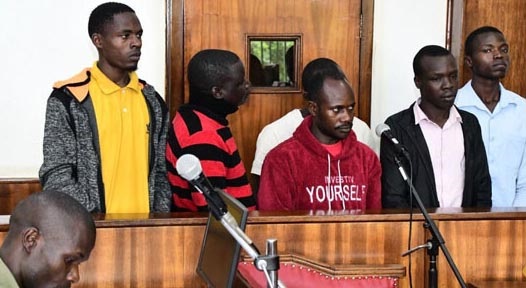
The President further disclosed that some of the individuals allegedly involved in torturing Nuwagaba were already facing court proceedings, although he stopped short of identifying the suspects or the specific cases before court.
Museveni also announced that he had instituted what he described as a “quiet investigation” into the allegations to establish the full circumstances surrounding Nuwagaba’s ordeal.
While the President acknowledged the torture claims and vowed accountability for those responsible, his statement did not link the Rwandan High Commission to the alleged abuse.
That leaves Rutabana’s categorical denial standing against allegations largely circulated through social media and reports quoting unnamed sources.
Now the focus has shifted to the official inquiries announced by Museveni, which could determine who was responsible for Nuwagaba’s alleged torture and whether the claims against individual security officers can be substantiated.







About the Author