
Kirabo breathed her last after battle lasting six years
HABARI DAILY I Kampala, Uganda I She had hoped against hope that she would survive and narrate her weird ordeal, but Claire Kirabo’s long battle for life ended on July 11, 2026, after medical complications claimed the life of the woman who had spent a record-breaking six years in the Intensive Care Unit (ICU) at Mbarara Regional Referral Hospital.
Kirabo, who was admitted in August 2020 after suffering a rare and debilitating stroke, became the hospital’s longest-staying ICU patient. Throughout her prolonged hospitalization, she depended on a ventilator to breathe, making her case one of the most extraordinary in Uganda’s public healthcare system.
Her death has not only brought to an end a remarkable fight for survival but has also reignited debate over the realities of prolonged life support, the enormous financial and emotional burden on families, and the challenges facing intensive care services in under-resourced public hospitals.
Medical complications
According to Mbarara Regional Referral Hospital, Kirabo succumbed to medical complications following years of intensive treatment. Doctors had initially received her in an unconscious state after the rare stroke severely affected her brain and breathing, leaving her unable to survive without mechanical ventilation.
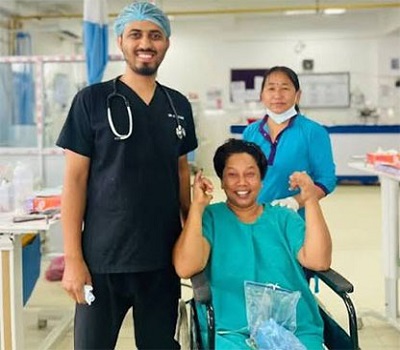
Over the years, medical teams worked tirelessly to stabilize her condition. Their efforts enabled her to regain a degree of consciousness, even though she remained critically ill and continued to rely on specialized life-support equipment.
Hospital officials often cited Kirabo’s case as a remarkable example of medical resilience and the dedication of healthcare workers who continued caring for her despite the complexity of her condition. Her six-year stay became a record for the hospital, illustrating both the possibilities and limitations of modern intensive care.
Prolonged life support
However, the same case also generated difficult questions about prolonged life support in a country where ICU beds remain scarce.
Critics argued that maintaining a patient on a ventilator for years placed an enormous strain on an already stretched health system while also imposing significant financial and emotional costs on families. Others questioned whether such prolonged occupancy of a critical care bed was sustainable in public hospitals that regularly face shortages of equipment, medicines and specialized staff.
Supporters of the medical team’s efforts, however, maintained that every patient deserves the best possible chance of survival regardless of how long treatment takes. They praised the doctors, nurses and intensive care specialists who remained committed to Kirabo’s care throughout her lengthy hospitalization.
Her next of kin similarly expressed deep appreciation for the hospital staff who kept her alive for years and supported the family during an extraordinarily difficult journey.
The hospital’s announcement of Kirabo’s death was intended to acknowledge both her resilience and the commitment of the healthcare workers who treated her. Instead, it sparked widespread discussion on social media, with many Ugandans divided over the broader implications of her prolonged stay in intensive care.
Medical miracle
Some users described her survival for six years on life support as a medical miracle, while others focused on the ethical and practical questions surrounding long-term intensive care in resource-limited settings.
Despite the differing opinions, there was broad recognition that Kirabo’s case highlighted the immense challenges faced by both critically ill patients and healthcare providers.
Her story became a powerful reminder of the advances that modern medicine can achieve, while simultaneously exposing the difficult decisions that arise when life-sustaining treatment extends over many years.
Although Claire Kirabo did not live to tell the full story of the ordeal she endured, her remarkable six-year fight for survival has left a lasting mark on Uganda’s healthcare system. Her experience will likely continue to shape conversations about critical care, medical ethics, resource allocation and the human determination to preserve life even in the face of overwhelming odds.







About the Author