
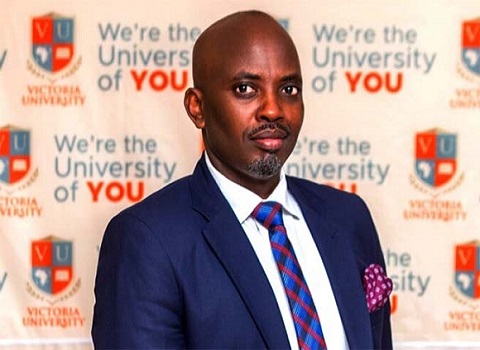
Dr. Lawrence Muganga
HABARI DAILY I Kampala, Uganda I Is Dr. Lawrence Muganga a Ugandan or Rwandan? That is the question which prompted him to clarify that he is a Munyarwanda by tribe but not Rwandese by nationality. This followed the Parliamentary Appointments Committee’s decision to reject his nomination as State Minister for Internal Affairs over concerns surrounding his citizenship status.
Speaking to reporters after the vetting process, he sought to dispel allegations that he held Rwandan nationality, insisting that his identity as a Munyarwanda should not be confused with being a citizen of Rwanda.
“Ndi Munyarwanda and Banyarwanda are among the tribes in Uganda. That is a simple fact. I’m not Rwandan. Before I came here, I had two citizenships — that’s the Ugandan and the Canadian citizenship,” he said.
The rejection of Dr. Lawrence Muganga’s appointment marks a dramatic setback for the academic and former university vice chancellor, whose nomination had initially been seen as one of the notable inclusions in President Yoweri Museveni’s cabinet for the 2026-2031 term.
Muganga was among several ministerial appointees vetted by Parliament following the President’s announcement of the new cabinet. However, members of the Appointments Committee reportedly raised concerns about his eligibility to hold ministerial office under Uganda’s citizenship laws.
According to reliable reports, lawmakers cited provisions of the Uganda Citizenship and Immigration Control Act, which bars dual citizens from occupying a number of sensitive sovereign offices listed under the Fifth Schedule. These positions include the presidency, vice presidency, prime ministership, cabinet ministerial posts and state minister positions.
The committee reportedly found that Muganga still possessed Canadian citizenship and was therefore ineligible to serve unless he formally renounced it. Questions were also raised about persistent claims linking him to Rwanda, allegations he strongly rejected during the vetting process.
Sources familiar with the proceedings indicated that Muganga assured the committee he was willing to renounce his Canadian citizenship to comply with Ugandan law. However, he reportedly maintained that he had never been a Rwandan citizen despite speculation surrounding his origins and previous employment history.
The issue of Muganga’s nationality has long generated public debate. Critics have frequently pointed to his past association with the Rwanda Revenue Authority, where he reportedly worked before relocating to Uganda. That history has fuelled perceptions among some sections of the public that he may have held Rwandan citizenship.
The controversy also resurrected memories of his 2021 arrest by Ugandan immigration authorities at Victoria University, where he served as vice chancellor. At the time, authorities accused him of overstaying in the country and linked him to allegations of espionage. The incident occurred during a period of heightened diplomatic tensions between Kampala and Kigali, leading to intense scrutiny of individuals perceived to have connections to Rwanda.
Lawmakers supporting the committee’s decision argued that the Ministry of Internal Affairs is one of the most sensitive government portfolios, overseeing immigration, citizenship, national identification and internal security matters. They contended that individuals with foreign citizenship or perceived allegiances to another country could face questions about their ability to exercise independent judgment in such a position.
For his part, Muganga has attempted to draw a clear distinction between ethnicity and nationality, emphasizing that being a Munyarwanda is a tribal identity shared by many Ugandans and does not automatically make one a citizen of Rwanda.
His clarification now places the focus on his next move, particularly whether he will proceed with formally renouncing his Canadian citizenship in an effort to remain eligible for future public office. For now, however, the committee’s decision has effectively ended his bid to join the new cabinet, making citizenship compliance the decisive factor in his failed ministerial appointment.







About the Author