

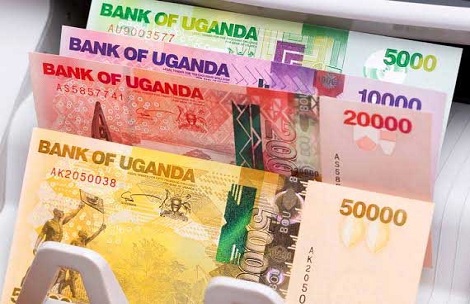
Uganda Shilling notes are losing their value by the day
HABARI DAILY I Kampala, Uganda I The Ugandan government is pursuing a combination of monetary tightening, reduced dependence on imports and increased export earnings to contain the shilling’s historic plunge against the US dollar, which has pushed the currency to its weakest level since 1993.
The shilling fell beyond Shs4,150 per dollar in October 2026, losing more than 10 per cent of its value since late August in what has been reported as the steepest depreciation among 144 currencies tracked by Bloomberg over the period.
The rapid decline has raised concerns about rising fuel prices, higher import costs and the potential impact on household purchasing power, forcing the Bank of Uganda (BoU) and President Yoweri Museveni to defend their preferred approaches to stabilising the economy.
However, rather than immediately deploying foreign-exchange reserves to support the currency, the government is emphasising tighter liquidity, import substitution and stronger foreign-currency inflows from exports and tourism.
Bank of Uganda tightens monetary policy
One of the most significant measures already implemented by the central bank is an increase in the cash reserve requirement for commercial banks from 11 per cent to 13.5 per cent, effective September 24, 2026.
The requirement compels commercial banks to hold a larger proportion of their deposits as reserves at the central bank, leaving less money available for lending and other transactions.
The measure is intended to tighten shilling liquidity and potentially moderate demand for foreign currency as businesses and investors compete for dollars.
The central bank has maintained its position that the exchange rate should largely be determined by market forces rather than defending a particular dollar price through continuous intervention.
The sharp depreciation has also prompted reports of an emergency Monetary Policy Committee meeting to consider the appropriate response to the currency turmoil.
Any further tightening could make borrowing more expensive and constrain credit to businesses. However, authorities face the challenge of containing exchange-rate pressure without unnecessarily slowing economic activity.
Museveni blocks use of foreign reserves
President Museveni has rejected a proposal to sell dollars from Uganda’s foreign-exchange reserves to support the shilling, arguing that the intervention could waste national resources by subsidising imports.
Speaking during the country’s 64th Independence Day celebrations at State House Entebbe on October 9, he said the government should preserve its dollar reserves instead of using them to lower the cost of importing goods.
“The governor was suggesting that he spends our dollar reserves to bring the dollar price down and I don’t agree with it. It is not correct to squander our dollars,” Museveni said, according to Pulse Uganda.
The President questioned the use of scarce foreign currency to purchase non-essential products such as perfumes and human-hair wigs, urging Ugandans to buy locally produced goods instead.
He argued that reducing unnecessary imports would ease demand for dollars while allowing domestic producers to expand their businesses.
Museveni also maintained that a weaker shilling could benefit exporters because they receive more Uganda shillings when converting their dollar earnings.
However, the strategy presents difficulties for manufacturers and businesses that rely on imported machinery, fuel, raw materials and other essential inputs.
Cutting imports and boosting local production
The government is also encouraging import substitution, with the President calling on consumers and businesses to prioritise locally produced goods wherever possible.
The approach is intended to reduce the amount of foreign currency spent on products that Uganda can produce domestically, while supporting local industries and employment.
The urgency of the strategy is underscored by the country’s growing import bill. Goods imports reportedly reached $2.31 billion in August 2026, representing a 66.5 per cent increase compared with the same month in 2025.
The increase has widened pressure on the country’s external balance by raising the amount spent on foreign goods relative to export earnings.
The challenge is particularly pronounced in the energy sector, where importers require substantial amounts of dollars to purchase petroleum products. Rising international fuel prices have compounded the pressure, with domestic pump prices approaching Shs7,000 per litre.
Telecommunications companies and businesses importing industrial machinery have also contributed to competition for scarce foreign currency.
Reducing imports alone, however, may not be sufficient because many businesses depend on imported inputs to maintain production and provide essential services.
Government turns to exports and tourism
Museveni has identified stronger export earnings and tourism receipts as important parts of the longer-term response.
Uganda earns foreign currency from products including coffee, gold, fish and other agricultural commodities, as well as tourism services.
Increasing production, expanding export markets and adding value to locally produced goods could improve the supply of dollars and reduce the economy’s vulnerability to external shocks.
However, falling international prices for some exports, including coffee, have weakened the country’s ability to generate additional foreign currency. Tourism receipts have also faced pressure, according to the President’s explanation of the depreciation.
The government therefore faces the dual task of increasing export volumes while improving the competitiveness and value of Ugandan products.
Capital flight adds to the pressure
The currency crisis has also been aggravated by foreign investors withdrawing money from Uganda’s local-currency debt market.
Citigroup estimates that approximately $200 million left Uganda’s markets over two weeks as investors shifted towards US Treasury assets offering more attractive returns.
Such withdrawals increase demand for dollars as investors convert their shilling-denominated holdings into foreign currency.
The Bank of Uganda has attributed the wider pressure to a stronger US dollar, shifting global interest rates, higher oil and shipping costs, weaker prices for some exports and strong domestic demand for foreign exchange.
A difficult balancing act
The government’s strategy seeks to address the underlying imbalance between Uganda’s demand for dollars and the foreign currency it earns, rather than artificially holding the exchange rate at a particular level.
But the approach carries risks. A weaker shilling raises the cost of imported goods and can feed into inflation, while tighter liquidity may increase borrowing costs for businesses and households.
Exporters could benefit from improved shilling earnings, but those benefits depend on their production costs and access to imported inputs.